Raised Bed Plans
A raised bed is four walls, a few corner posts and a lot of soil, so the numbers that matter are the board lengths and the cubic yards. This guide walks through the build and shows the real cut list, soil and cost for a classic 4 × 8 ft cedar bed.
Open the free planner Free · no sign-up · opens with an 8 × 4 ft bed (change it once it opens)
What you'll need
Materials
- One western red cedar 4x4, 8 ft long (the corner and middle posts)
- Ten cedar 2x6 boards, 8 ft long (the walls and the cap rail)
- Two 3″ box-size packs of exterior screws
- Two rolls of 1/2″ hardware cloth, 36″ wide, to keep gophers out of the bottom
- Raised-bed soil mix: about 26 cubic feet for this bed, or 14 two-cubic-foot bags
- Wood glue for the cap miters
Tools
- Miter saw or circular saw and speed square
- Drill/driver with a countersink bit
- Long level and tape measure
- Staple gun and tin snips for the hardware cloth
- Clamps
These are the materials for the 8 × 4 ft, two-course bed. A taller bed, a waist-high planter, a row of beds or a trellis changes the quantities, and the planner recounts every board and bag.
Types of styles
The planner builds several kinds of bed. Pick the one that matches how you like to garden.
- Ground-level bed. The classic: walls sit on the ground, held by corner and middle posts. It is the cheapest, and the default is 8 × 4 ft.
- Elevated planter. A waist-high box on legs, with slats and an optional lower shelf. It saves your back and works on a patio.
- Trellis bed. Add a trellis at the back or the sides for climbing beans, peas and cucumbers.
- Row or U-shaped layout. Two or more beds with walking paths between them, or a U that wraps around you.
- Hoops and covers. Add PVC or conduit hoops for row cover, frost cloth or insect netting.
Start from an example
Pick an example and the planner opens with it already loaded. You can change every size and option from there.
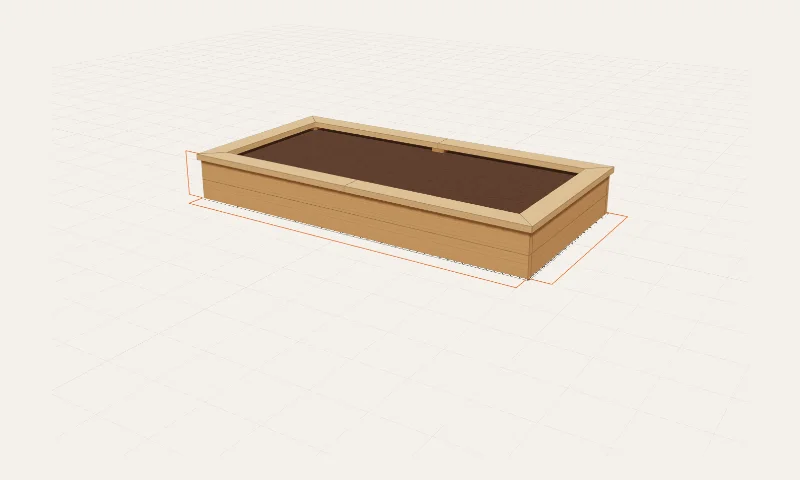
4×8 cedar bed
The default: a classic ground-level bed with two courses and a cap rail.
- 8′ × 4′, 11″ walls
- 0.97 yd³ of soil
- Est. $261.77 build, $387.49 with soil
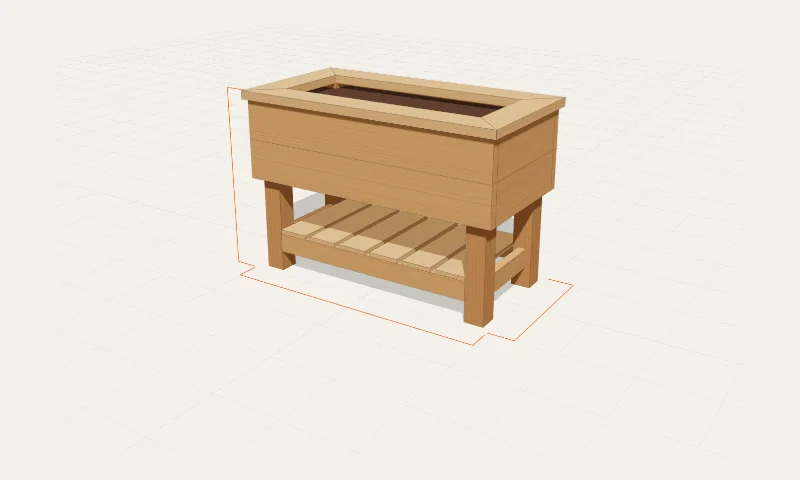
4×2 waist-high cedar planter
A 4 × 2 ft planter on 32″ legs, so you can garden standing up.
- 4′ × 2′, 32″ tall
- 0.24 yd³ of soil
- Est. $330.08 build, $366.00 with soil
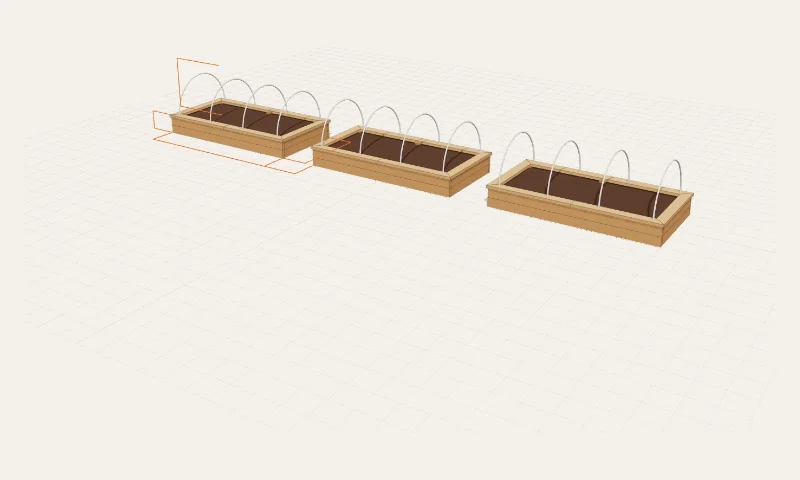
Row of 3 beds + hoops
Three 8 × 4 ft beds in a row with 24″ paths and row-cover hoops.
- 28′ 1 1/2″ × 4′ 1 1/2″
- 87 sq ft growing area, 2.91 yd³
- Est. $832.61 build, $1,191.81 with soil
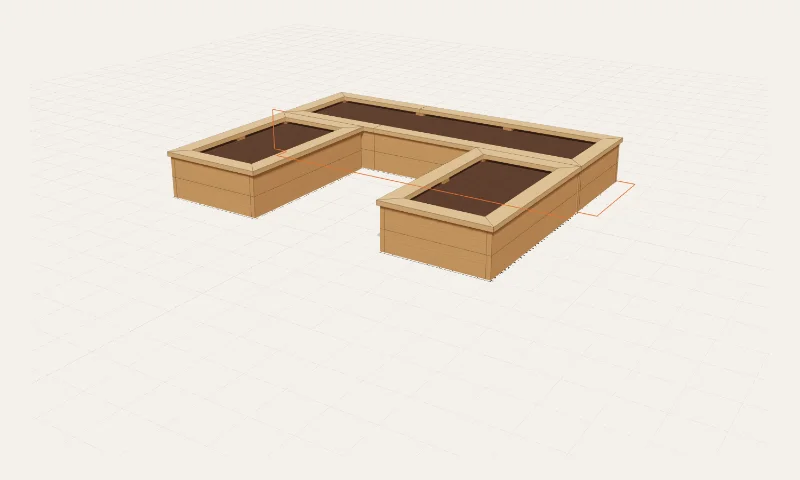
U-shaped garden
Three beds in a U, with deeper 2x8 walls so you can work in the middle.
- 10′ 1 1/2″ × 8′ 1 1/2″
- 52 sq ft growing area, 2.32 yd³
- Est. $793.52 build, $1,080.88 with soil
Step-by-step overview
- Choose the size and height. Beds up to about 4 ft wide let you reach the middle from both sides. Two courses of 2x6 give an 11″ wall, which suits most vegetables; add a third course for deep-rooted crops.
- Cut all the parts. Cut the posts, side and end boards, and the cap rails from the cut list. The cap corners are cut at 45° on the flat, and the listed lengths are long point to long point.
- Level the site and lay the cloth. Clear and level the ground where the bed will sit. Lay the hardware cloth in 36″ strips, overlapped 2″, a little bigger than the bed.
- Build the two ends. Screw the end boards to two corner posts, flush at the top, with two 3″ screws per board per post.
- Join the ends with the long boards. Stand the ends up and screw the long boards across them, two screws into each post, adding the middle posts as you go. Stagger any joints so they land on a post.
- Check it is square and level. Set the frame in place and compare the diagonals. Staple the hardware cloth to the bottom inside of the walls.
- Add the cap. Lay the cap around the top with a 3/4″ overhang outside. Glue the miters, screw down into the walls every 12″, and drive a screw across each miter.
- Fill with soil. Fill with raised-bed mix to about 1″ below the top, water it in, and top up after it settles.
Example cut list and cost
This is the planner’s default bed: 8 × 4 ft outside, 11″ tall walls made from two courses of cedar 2x6, with a cap rail and hardware cloth underneath. The inside is 93″ × 45″ with 10″ of soil, which gives you 29 square feet of growing area.
Cut list
| Part | Material | Qty | Length |
|---|---|---|---|
| Corner post | 4x4 cedar | 4 | 11″ |
| Middle post | 4x4 cedar | 2 | 11″ |
| Side board | 2x6 cedar | 4 | 96″ |
| End board | 2x6 cedar | 4 | 45″ |
| Cap rail | 2x6 cedar | 2 | 49 1/2″ |
| Cap rail | 2x6 cedar | 4 | 48 3/4″ |
That is 20 pieces, packed onto 11 boards. The planner also draws the miters and checks that the walls will not bow under the weight of the soil.
Shopping list and cost
| Item | Qty | Cost |
|---|---|---|
| Western red cedar 4x4 × 8 ft | 1 | $26.35 |
| Western red cedar 2x6 × 8 ft | 10 | $155.50 |
| Exterior screws 3″ (box ≈ 72) | 2 | $23.96 |
| Hardware cloth 1/2″ mesh, 36″ × 10 ft roll | 2 | $55.96 |
| Raised-bed soil mix, 2 cu ft bags | 14 | $125.72 |
| Estimated total (before tax) | $387.49 | |
The build alone is $261.77 (lumber $181.85) and the soil adds $125.72 for the 14 bags. The planner’s soil calculator says this bed needs 23.8 cubic feet, or 26.2 with 10% for settling, which is about 0.97 cubic yards. Prices are typical big-box defaults you can edit in the planner.
Mind the weight. Wet soil is heavy. The planner estimates this bed at about 2,380 lb wet and 1,900 lb dry, so choose the spot before you fill it.
Tips and common mistakes
- Choose rot-resistant wood. Cedar costs more than pine but lasts years longer in wet soil. If you use treated lumber, check that it is rated for ground contact and garden use.
- Keep beds narrow. Four feet wide is the usual limit for reaching the middle. Wider beds also push harder on the walls, so they need more bracing.
- Level the ground. The walls follow the ground, so use a long level, and shim or dig out the high side before you build.
- Add hardware cloth if you have gophers or moles. Staple it to the underside of the walls before you fill the bed.
- Order soil by volume. Multiply the inside length, width and depth, then add about 10% because the soil settles. Bulk soil is far cheaper than bags above one or two cubic yards.
- Brace long beds. A bed over about 8 ft long, or tall walls, can bow. Add middle posts or cross ties as the planner suggests.
Frequently asked questions
How much does it cost to build a raised bed?
The 8 × 4 ft cedar bed costs about $262 to build at typical big-box prices, or about $387 with soil. A smaller bed or one built from cheaper lumber costs less.
How much soil do I need for a raised bed?
Multiply the inside length, width and soil depth. The default bed has 23.8 cubic feet inside, and with 10% for settling you buy about 26.2 cubic feet, roughly one cubic yard, or 14 two-cubic-foot bags. The planner calculates it for any size.
How tall should a raised bed be?
Eleven inches, two courses of 2x6, works for most vegetables. Add a third course for carrots and other deep roots. A waist-high planter, around 32 inches, lets you garden without bending.
What is the best wood for a raised bed?
Cedar is the usual choice because it resists rot without chemicals. Pressure-treated lumber rated for ground contact is a cheaper option. Avoid old railroad ties and wood treated with preservatives not meant for gardens.
Can I plan a row of beds or a trellis?
Yes. The planner can build a single bed, a row of two or more beds with paths between them, or a U-shape, and it can add a trellis, hoops for row cover and a lower shelf on planters.